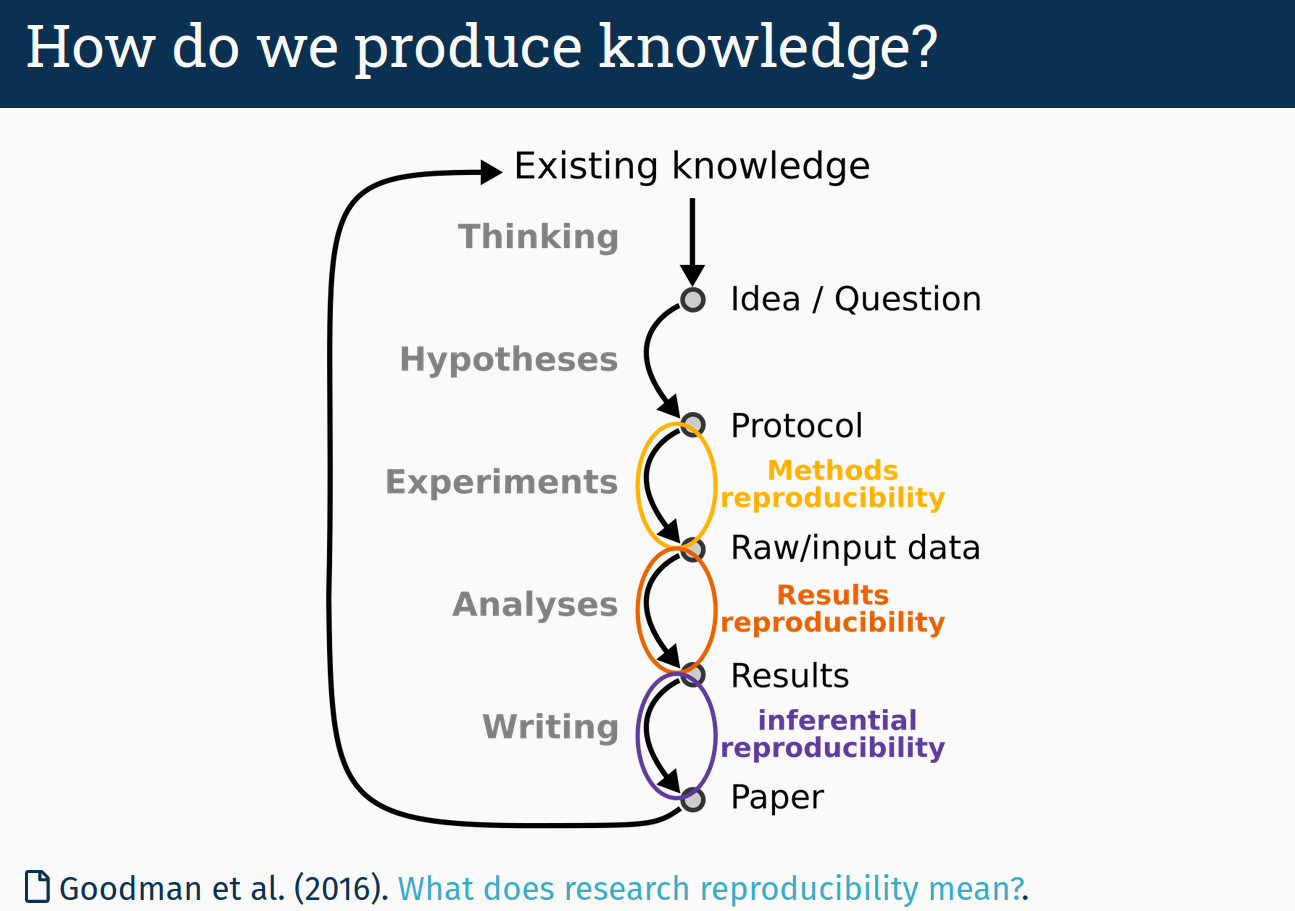
The goal of this workshop is to introduce participants to the principles and practical tools needed to conduct reproducible research using R. The workshop focuses on helping participants understand how to organize data, code, and analyses so that results can be reliably reproduced by others or by themselves in the future. Participants learn how to integrate documentation, data processing, and reporting within structured workflows that improve transparency, collaboration, and long-term project sustainability. Reproducible workflows ensure that when the same data and code are used, the same results can be obtained, which is considered a fundamental standard of scientific and analytical work.
More broadly, the workshop aims to strengthen participants’ ability to implement efficient and collaborative analytical pipelines. Through hands-on exercises, participants are typically introduced to tools such as version control systems, dynamic reporting, and project organization practices that allow analyses to be tracked, shared, and updated efficiently. These approaches help reduce errors, improve team collaboration, and support the communication of results, enabling participants to apply reproducible practices across research, environmental assessments, and data-driven decision-making projects.
Have a project in mind and want to work with us?
Reach out!